


Curved Laminated Glass For Facades
Shape: Bend glass
Thickness: 8.38mm(8+8+0.38), 10.76mm (5+5+0.76), 13.52mm (6+6+1.52)
Types of laminated glass:
Clear Laminated Glass
Low iron Laminated Glass
Tinted Laminated Glass
Frosted Laminated Glass
Interlayer options: PVB,SGP,EVA
MOQ: 1*20GP Full Container Loading
Delivery time: 7-15 days, urgent service available
Curved laminated glass for façades combines shaped architectural glazing with a bonded safety interlayer. It is developed for curtain walls, entrances, atriums and feature elevations where panel geometry, optical quality and installation fit must remain consistent across a production batch. LIKEWAY GLASS reviews the glass makeup, radius, arc length, chord length, rise, coating surface and installation orientation before mold development. This engineering-led workflow helps façade contractors reduce mismatch between the theoretical model, the glass panels and the supporting system.
Types of Curved Laminated Glass
Curved heat-strengthened laminated glass: A practical option for many façade assemblies where improved thermal-stress resistance and stable fracture behavior are required.
Curved tempered laminated glass: Used where higher mechanical strength or safety performance is specified, subject to radius and glass-makeup feasibility.
SGP curved laminated glass: Considered for demanding structural configurations or higher post-breakage performance, following project engineering review.
Curved laminated IGU: Combines a curved laminated lite with an insulating cavity, Low-E coating, warm-edge spacer or other energy-performance components.

Technical Specifications
|
Parameter |
Project-specific options |
|
Glass base |
Annealed, heat-strengthened or tempered glass, subject to the required construction |
|
Interlayer |
PVB, SGP or other approved interlayer according to design intent |
|
Appearance |
Clear, low-iron, tinted, ceramic-fritted or screen-printed |
|
Geometry |
Project-specific radius, arc length, chord length, rise and convex/concave orientation |
|
Processing |
Polished edges, holes, notches and CNC cut-outs completed before heat treatment where applicable |
|
Performance options |
Safety, structural, solar-control, thermal-insulation, acoustic and UV-control configurations |
|
Size and tolerance |
Confirmed after review of thickness, glass makeup, curve geometry and production method |
|
Reference standards |
Project specifications may reference EN, ASTM, CE or SGCC requirements as applicable |
Curved Laminated Glass Manufacturing Process
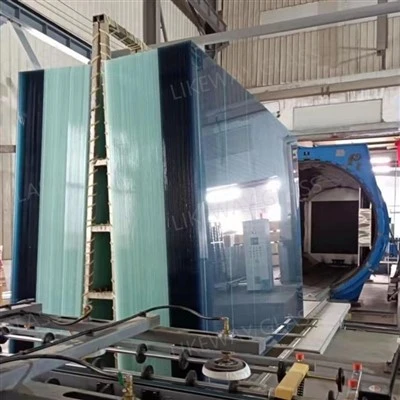
Each order starts with a drawing and feasibility review. The engineering team checks the relationship between nominal radius, chord, arc, rise, glass thickness, interlayer, coating surface and frame interface. A mold or production setup is then developed and calibrated. Glass is cut, edged and machined before bending or heat treatment. After washing, the lites are aligned and laminated under controlled temperature and pressure. The first finished panel is measured against the approved drawing or template before batch production proceeds. Final units are inspected, numbered and packed according to the project schedule.
Applications
Typical applications include curved curtain walls, glazed entrances, atrium enclosures, corner transitions, retail façades, airport and station elevations, museums, hotels and landmark commercial buildings. The product is especially useful where a flat segmented solution would interrupt the design line or create excessive framing joints.

FAQs
1. Is the nominal radius enough for a quotation?
No. Please also provide arc or chord dimensions, rise, glass makeup, concave/convex direction, quantity and drawings showing the measurement reference.
2. Can Low-E curved laminated glass be supplied?
Yes, subject to coating type, bend direction, surface position and the full glass configuration being confirmed during technical review.
3. Should a façade use PVB or SGP?
The choice depends on support conditions, design loads, post-breakage requirements, edge exposure and local codes. It should be confirmed by the project engineer.
4. How is optical distortion controlled?
The process combines suitable glass selection, mold calibration, controlled bending and tempering parameters, first-piece approval and agreed visual inspection conditions.
5. Can replacement panels be produced later?
Retained drawings and mold or geometry records can support replacement work, although actual matching remains subject to original project information and material availability.
Hot Tags: curved laminated glass for facades, China curved laminated glass for facades manufacturers, suppliers
You Might Also Like



Send Inquiry