

Light transmittance is an important factor when choosing glass for architectural, commercial, and industrial applications. Compared with normal clear glass, ultra clear glass offers higher visible light transmittance, less green tint, and better color clarity.
But why does ultra clear glass transmit more light? The main reason is its lower iron oxide content. This article explains how low iron glass works, its key advantages, common applications, and what buyers should consider when selecting a supplier.
What Is Ultra Clear Glass?
Ultra clear glass, also known as low iron glass or extra clear glass, is a type of float glass manufactured using raw materials with lower iron content than conventional clear glass.
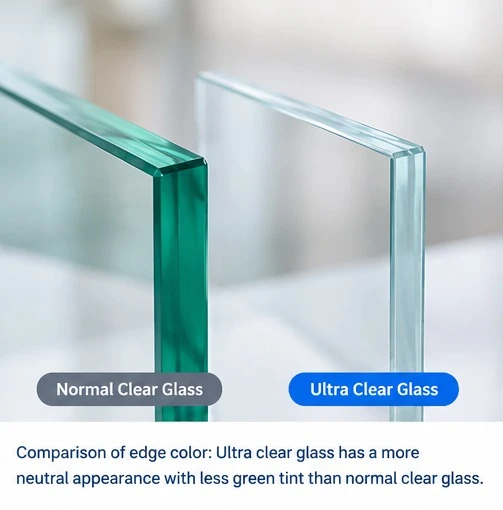
Iron oxide naturally occurs in glass-making raw materials. It absorbs some visible light and contributes to the green tint often seen in standard clear glass, especially along exposed edges.
By reducing iron content, ultra clear glass achieves a more neutral appearance and typically higher light transmittance at the same thickness. It is widely used in projects where transparency and color accuracy are important.
Why Does Ultra Clear Glass Have Higher Light Transmittance?
Lower Iron Content Reduces Light Absorption
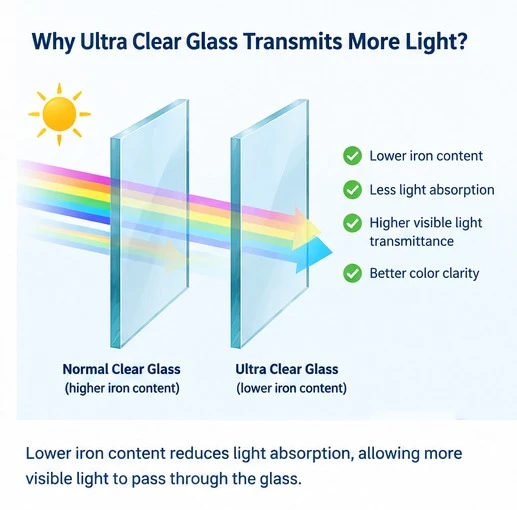
The primary reason for the higher light transmittance of ultra clear glass is its reduced iron oxide content.
When light passes through glass, part of it is absorbed by the material. Standard clear glass absorbs more light because of its higher iron content. Low iron glass reduces this absorption, allowing more visible light to pass through.
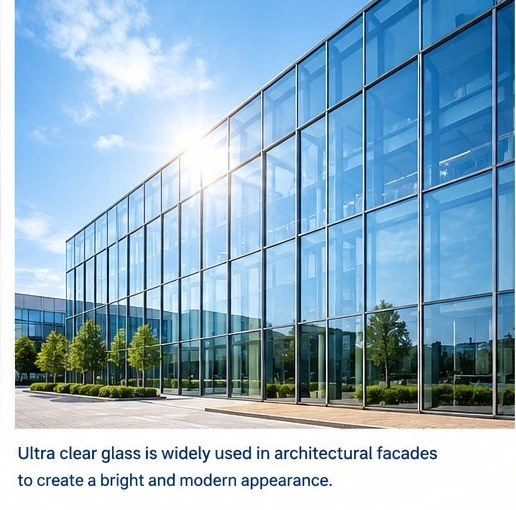
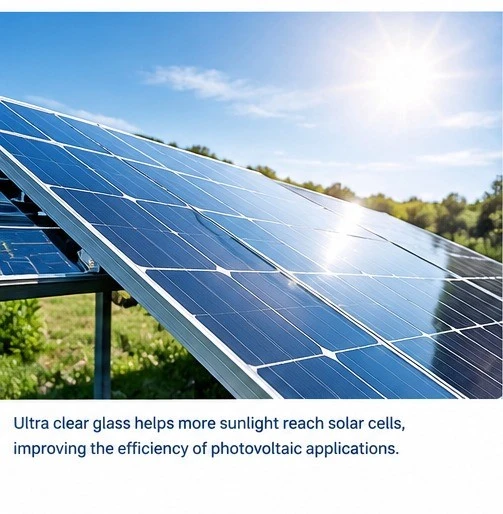
This makes ultra clear glass suitable for applications requiring excellent transparency, including glass facades, display cabinets, and solar panels.
Less Green Tint Improves Color Clarity
Normal clear glass can produce a noticeable green tint, particularly in thick panels. Ultra clear glass significantly reduces this effect, allowing objects and colors behind the glass to appear more natural.
This advantage is especially valuable in luxury retail displays, museums, modern interiors, and architectural projects where visual appearance matters.
Glass Thickness Affects Light Transmittance
Glass thickness also influences light transmission. Generally, thicker glass absorbs more light as the light travels through a longer path within the material.
The optical difference between ultra clear glass and normal clear glass can therefore become more noticeable in thick glass panels. Actual performance depends on glass composition, surface quality, coatings, and measurement conditions.
Surface Reflection Is Another Factor
Some light is reflected from the glass surfaces rather than transmitted. Ultra clear glass primarily improves transmission by reducing absorption, while anti-reflective coatings can further reduce surface reflection.
Therefore, ultra clear glass and anti-reflective glass are different products with different optical characteristics.
Ultra Clear Glass vs. Normal Clear Glass
|
Feature |
Ultra Clear Glass |
Normal Clear Glass |
|
Iron content |
Lower |
Generally higher |
|
Light transmittance |
Typically higher |
Typically lower |
|
Color appearance |
More neutral |
May appear green |
|
Color accuracy |
Better |
More color distortion may occur |
|
Cost |
Generally higher |
Generally lower |
|
Applications |
Premium facades, displays, solar glass |
General windows and doors |
How Much Light Can Ultra Clear Glass Transmit?
Some thin, uncoated ultra clear glass products can achieve visible light transmittance above 90%. However, the actual value depends on thickness, composition, coatings, and testing methods.
Before purchasing, check the following specifications:
Glass thickness: Thicker glass generally transmits less light.
Iron content: Lower iron content can improve transparency.
Surface coatings: Coatings may increase or decrease light transmission.
Processing: Lamination and insulating glass assembly can affect the final performance.
For accurate comparisons, request a technical data sheet showing visible light transmittance and the relevant testing conditions.
Common Applications of Ultra Clear Glass
Ultra clear glass is widely used in applications where transparency and appearance are essential.
Architectural facades: Creates bright, modern building exteriors with reduced green tint.
Solar panels: Helps sunlight reach photovoltaic cells when used in suitable solar glass products.
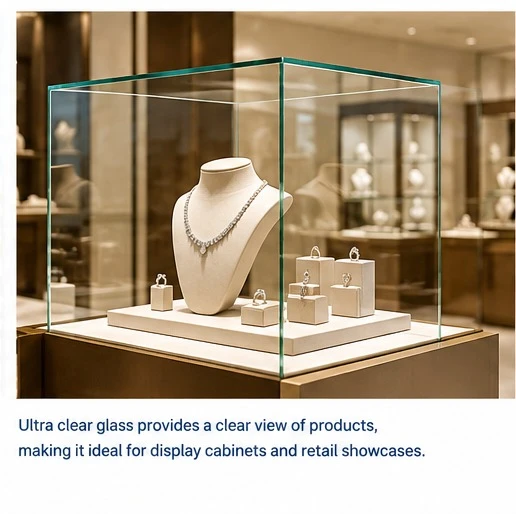
Display cabinets: Provides clear views of jewelry, artwork, and retail products.
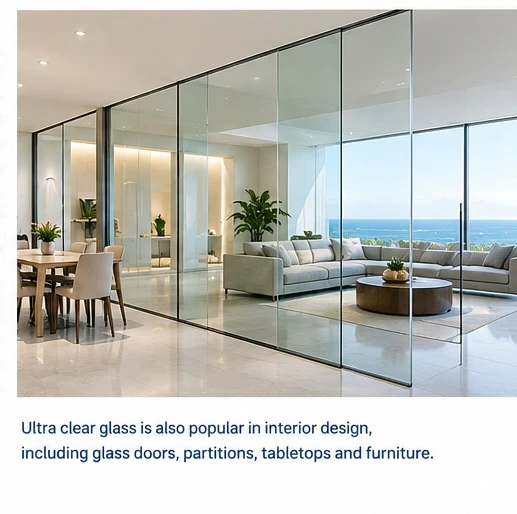
Interior design: Enhances the appearance of glass partitions, doors, tabletops, and furniture.
Shower enclosures and balustrades: Offers a cleaner appearance, particularly along exposed glass edges.
The required safety configuration, thermal performance, and applicable building standards should be evaluated separately for each project.
Is Ultra Clear Glass Worth the Extra Cost?
Ultra clear glass generally costs more than standard clear glass because of its raw material requirements and production controls.
It is worth considering when a project requires high transparency, reduced green tint, accurate color presentation, or a premium finish.
For standard windows where these benefits are less important, normal clear glass may be a more economical option.
When comparing quotations, consider glass thickness, dimensions, processing requirements, quality standards, packaging, and transportation costs rather than focusing only on the unit price.
How to Choose a Reliable Ultra Clear Glass Supplier
Before placing an order, buyers should evaluate several key factors:
Technical specifications: Confirm thickness, dimensions, and visible light transmittance.
Processing capabilities: Check cutting, edging, tempering, laminating, and insulating glass options.
Quality control: Ask about inspection procedures, dimensional tolerances, and optical quality.
Safety compliance: Ensure the final product meets relevant project standards.
Export experience: Confirm protective packaging, shipping arrangements, and documentation for international orders.
A reliable supplier should provide clear technical information and recommend suitable glass specifications for your project.
Conclusion
Ultra clear glass has higher light transmittance than normal clear glass primarily because its lower iron oxide content reduces visible light absorption. It also offers less green tint and better color clarity, making it suitable for architectural facades, solar applications, retail displays, and premium interiors.
The right choice depends on your project's optical requirements, glass thickness, processing needs, safety standards, and budget.
Looking for a reliable ultra clear glass supplier? Contact our team to discuss customized sizes, available thicknesses, processing options, and project requirements.


